St. John's
Sermon - Sep 14, 2026 The Little Ones: Matthew 18:1-14
The Little Ones: Matthew 18:1-14
The Little Ones: Matthew 18:1-14
September 13, 2026
Rev. Heather Carlson, St. John's Presbyterian Church, Medicine Hat, AB
“At that time…” we join the scene part way through. Matthew wants us to remember that Peter, James and John have travelled up the mountain and witnessed the transfiguration. When they return they find the disciples being asked to heal a young boy possessed, but they fail. Then they are confronted by a prediction of the death of Jesus and the pronouncement that the burden of the Temple tax is no longer theirs to hear.
So they are eager to stack up the clues… who is the greatest in the kingdom of Heaven? Is it Peter, James and John? How about the 12, or 72, or inner circle of Jesus followers? If Jesus dies, will he appoint a successor? If the Temple tax no longer sits on their shoulders, are they ahead of the Pharisees and teachers of the law?
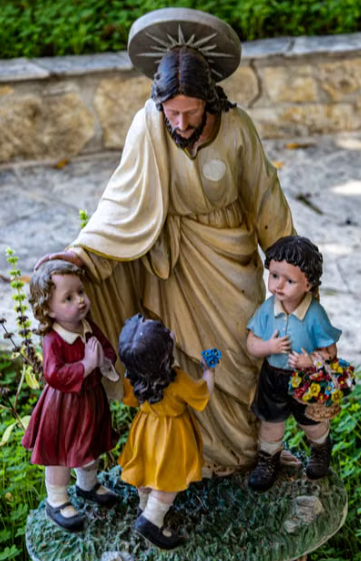
Jesus looks over the heads of those who have drawn close with their questions, and brings to the heart of the circle a child… not Norman Rockwell and Anne Geddes childhood nostalgia. In 1st century Palestine this is one who likely didn’t even yet have a name - best to wait and see if they lived through perilous first five years of life.
THIS one? This one demonstrates the favour of God? It’s not their age though, nor their demonstration of power or expertise. Jesus says it is humility, like that of a child, that marks the greatest in the kingdom of heaven.
The disciples were so preoccupied with the organization of Jesus’ kingdom that they lost sight of its purpose. They sought positions of advantage, status and ambition instead of seeking a place to serve. Jesus says to become humble like a child. Childlike, not childish.
Childish is self-centered, stubborn, jealous, demanding the spotlight, insisting on our own way, or refusing to take responsibility. Jesus is pointing to the positive qualities of a child—trust, dependence, openness, being teachable, with a willingness to receive help. Childlike humility recognizes, “I don’t know everything, I need God, and I can learn from others.”
Listen again… Where is the Holy Spirit instructing you to turn away from childish behaviour?
Where do you hear the Holy Spirit inviting you to grow in childlike trust and humility?
And then Jesus takes it one step further to say this little child represents himself. “Whoever welcomes one such child in my name welcomes me.”
The why of our hospitality.
Potluck - how important welcome and safety is.
Box - clothing and toiletries for Mustard Seed to meet practical needs
Greeters - seen and celebrated
Pastoral care teams that visit shut ins and those confined to care homes.
Coffee - serve with generosity
Training here so we can use those same attributes in our neighbourhoods, families and workplaces. Wherever a little one is welcomed as Jesus, he is there.
The why of our Christian education. As a church we ought to never take lightly the spiritual education and protection of those young in age or young in the faith.
Little Wonders
Nursery care. A place to wander in bodies.
Family nights. A place for those who cannot make Sunday mornings.
Programming - God Loves Me curriculum. Biblical story at age appropriate stage
Begin thinking about those who need support past elementary aged teaching
Discipleship seriously - people who come at aged 20, 40 or 60 may have no foundation in faith.
How are we making disciples? How is that going?
There is much at stake: “If any of you cause one of these little ones who believe in me to sin, it would be better for you if a great millstone were fastened around your neck and you were drowned in the depth of the sea.”
Jesus is not messing around. Jesus sets great responsibility upon the shoulders of his followers. Not only individually to remove any relationship, practice or activity that leads a vulnerable one to stray. But also requiring us to mature in the body as a whole. Jesus points out that we can cause others to sin by tempting them, or neglecting and demeaning them.
Expecting instant maturity — Treating new believers as though they should immediately understand the Bible, theology, church culture, and Christian behavior. Spiritual growth takes time.
- Using shame instead of discipleship — Correcting someone's mistakes publicly, harshly, or without compassion can make a newcomer feel that they don't belong.
- Creating an “insider” culture — Using unfamiliar Christian terminology, traditions, or social norms without explaining them can leave newcomers feeling like outsiders.
- Favoritism and cliques — Giving attention, leadership opportunities, or friendship primarily to established members can cause new believers to feel invisible.
- Overloading new believers with rules — Emphasizing what they must stop doing before helping them understand God's grace, love, and the transforming work of the Holy Spirit.
- Putting immature believers into positions they aren't ready for — A new Christian may be eager to serve, but placing responsibility on them without adequate support can overwhelm them.
- Exposing them to unhealthy spiritual influence — Gossip, hypocrisy, manipulation, legalism, or questionable behavior among mature Christians can be especially confusing and discouraging to someone just learning what following Jesus looks like.
We must remove any person, program or teaching that threatens the spiritual growth of the body.
A healthy church therefore asks not only, “Are we teaching the truth?” but also, “Are we helping people encounter Christ and grow in Him?” Hold truth and grace together. Mature Christians should use their strength to protect, encourage, teach, and patiently walk alongside those who are just beginning their journey with Jesus.
So perhaps the question Jesus leaves with us today is not, “Who is the greatest among us?” but, “Who is standing in the middle of our circle?” Who is the person we might overlook because they are young, inexperienced, struggling, inconvenient, or simply not yet sure how all of this works? Jesus puts the child in the centre and says, in effect, “Pay attention here. This is what my kingdom looks like.” The measure of our maturity is not how much we know, how long we have been here, how important our position is, or how much we can accomplish. It is whether we have become humble enough to trust God, humble enough to welcome the vulnerable, humble enough to make room for those who are new, and humble enough to remove from our own lives whatever might cause another to stumble. May we become the kind of church where children are protected, newcomers are patiently discipled, questions are welcomed, burdens are shared, and no one is made to feel that they are less important because they are still growing. Because when we welcome the little one, Jesus says, we welcome him. And when we protect the vulnerable, nurture the young in faith, and make ourselves servants rather than seeking status, we discover that we are not merely building a better church—we are learning to live as citizens of the kingdom of heaven.

World Communion Sunday
Posted On Oct 06 2026